Same ingredient, cheaper form: how a supplier cuts your cost without touching your label
Your label says glucosamine sulfate. The bottle contains hydrochloride. How suppliers swap a cheaper form of the same ingredient, and how to stop it.
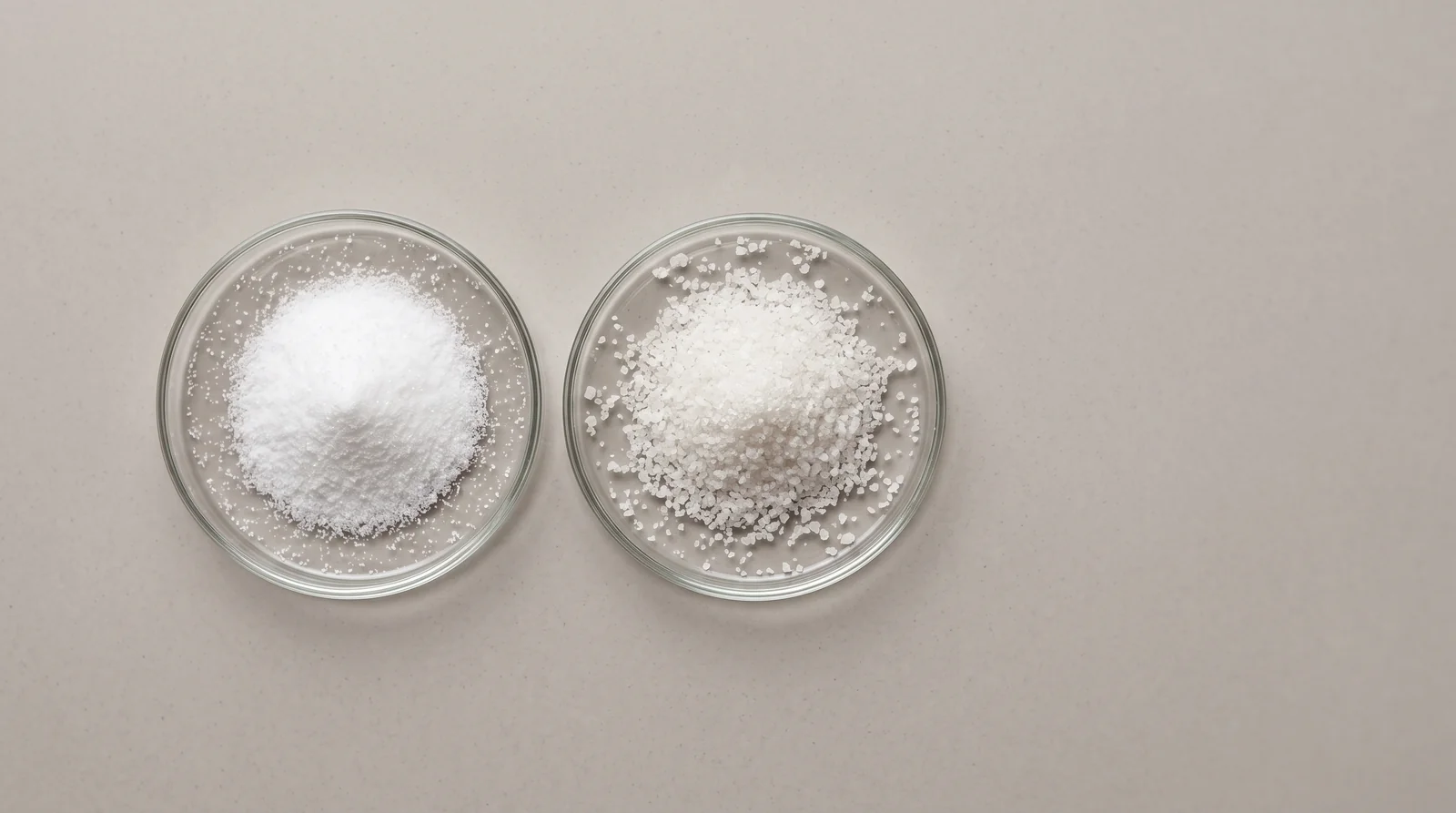
Same ingredient, cheaper form
A price increase is a conversation.
A form substitution is not, because nobody notices it happened.
When we reviewed a nine-SKU supplement line against its incoming manufacturer's quotation, the most interesting findings were not the quantity gaps. They were the places where the ingredient name on the label stayed exactly the same while the substance behind it changed.
That is the cost cut that never appears in a negotiation.
What is ingredient form substitution?
It is the replacement of a named ingredient with a cheaper salt, ester, or delivery form of the same compound. Glucosamine sulfate becomes glucosamine hydrochloride. Methylcobalamin becomes cyanocobalamin. Magnesium bisglycinate becomes magnesium oxide. The ingredient name on the label often remains defensible, the raw material cost falls, and the product performs differently.
Here is what it looks like in practice.
The four substitutions we found
Glucosamine sulfate to glucosamine hydrochloride. Both are glucosamine. The hydrochloride salt is cheaper. It is also the form on which the clinical evidence base is thinnest, and the one many brands specifically avoid. The corrected specification named the full-dose sulfate potassium form, shellfish free.
Methylcobalamin to cyanocobalamin. Both are vitamin B12. Cyanocobalamin is the cheap synthetic form. Brands that pay for methylcobalamin are paying for the form, not for the vitamin, and a downgrade removes the entire reason the line item existed.
Magnesium bisglycinate chelate to oxide or carbonate. Same element, very different product. This one is usually caught by customers rather than by brands, because the cheaper forms are the ones associated with digestive complaints.
Liposomal delivery to standard powder. The delivery system is the product claim. Remove it and the ingredient is still present, still declarable, and no longer doing what the marketing says it does.
The two directions nobody watches
Substitution is the obvious risk. Two quieter ones cost just as much.
Serving size inflation. A quotation came back with a formula requiring three capsules per serving where the original product used two. The per-serving dose is defensible. The consumer experience, the bottle count, the cost per day and the reorder cycle all change. A brand that approves a formula without checking servings per container has silently repriced its own product.
Dose inflation. The same review found a vitamin D quoted at more than six times the original dose. Higher is not automatically better. It changes the regulatory position of the product in several markets, it changes the label panel, and it can push a supplement toward a classification the brand did not intend. Ask why a manufacturer is proposing more of something. There is usually a reason, and it is rarely generosity.
How to write substitution out of your specification
Most brands specify an ingredient. That is the gap. Specify the substance.
For every active on the panel, your specification sheet must state:
- The exact chemical form or salt, written out. Not "magnesium". Not "glucosamine".
- The dose, and whether it is elemental or as the salt. This single ambiguity accounts for a large share of disputes, because a stated milligram figure means two different things depending on which is intended.
- The delivery system, if it is part of your claim. Liposomal, chelated, enteric coated, time release.
- For live cultures, the named strains, not the genus or species alone, and whether the count is guaranteed at manufacture or through expiry. Those are entirely different commercial commitments.
- The excipients and capsule shell. Gelatin against vegetarian capsule is a market access question, not a detail.
- The allergen declaration, derived from the actual raw materials. Marine collagen and eggshell membrane bring fish and egg into a product whose label may not mention either.
Then add one line that does more work than the other six: any change of form, salt, delivery system or strain requires written approval before production.
Without it, a manufacturer switching to a cheaper salt has broken nothing you can point to.
Why this is worth more than a price negotiation
Brands spend weeks arguing over a few cents of unit cost.
The form of a single active is frequently worth more than the entire margin under discussion, and unlike price, it does not appear in a quotation comparison. Two quotes can look identical, name the same ingredients, and describe materially different products.
That is why a formula review comes before a price negotiation, not after.
Key facts
- Form substitution replaces a named ingredient with a cheaper salt or delivery form while the label stays defensible.
- Glucosamine sulfate and glucosamine hydrochloride are both glucosamine, and are not commercially equivalent.
- Cyanocobalamin is the cheap synthetic form of vitamin B12; methylcobalamin is what brands normally pay for.
- A quoted dose in milligrams is ambiguous unless the specification states elemental or as-salt.
- Probiotic counts guaranteed at manufacture and guaranteed through expiry are different commitments.
- Serving size changes silently reprice a product by changing servings per container.
- One specification line prevents most of this: no change of form, salt, delivery system or strain without written approval.
Want your formulas reviewed before you sign?
We are based in Shanghai. We review quotations against your existing product, in Chinese, and tell you what changed.
Contact us via E-mail or WhatsApp.
Hamza runs Kuai Sourcing from Shanghai. Member of the China Electronics Chamber of Commerce (CECC).