You Paid for the Mold. Do You Own It?
You paid a mold fee for your custom product. That does not make the mold yours. Here is what ownership really takes, and how to protect it.
You designed a custom product. The factory quoted a mold fee. You paid it.
So the mold is yours. Right?
Not necessarily. Paying for a mold and owning it are two different things. Many brand owners find that out the day they try to move production to another factory, and the mold does not come with them.
Why paying is not owning
Most brands have one document: an invoice that says "mold fee" or "tooling cost." That invoice proves you paid. It does not say:
- Who owns the mold once it is made.
- Who owns the design files used to cut it.
- Where the mold stays, and whether it can be moved.
- Whether the factory can use it to make the same product for someone else.
When those questions are not written down, the factory answers them. And the answer usually favours the factory.
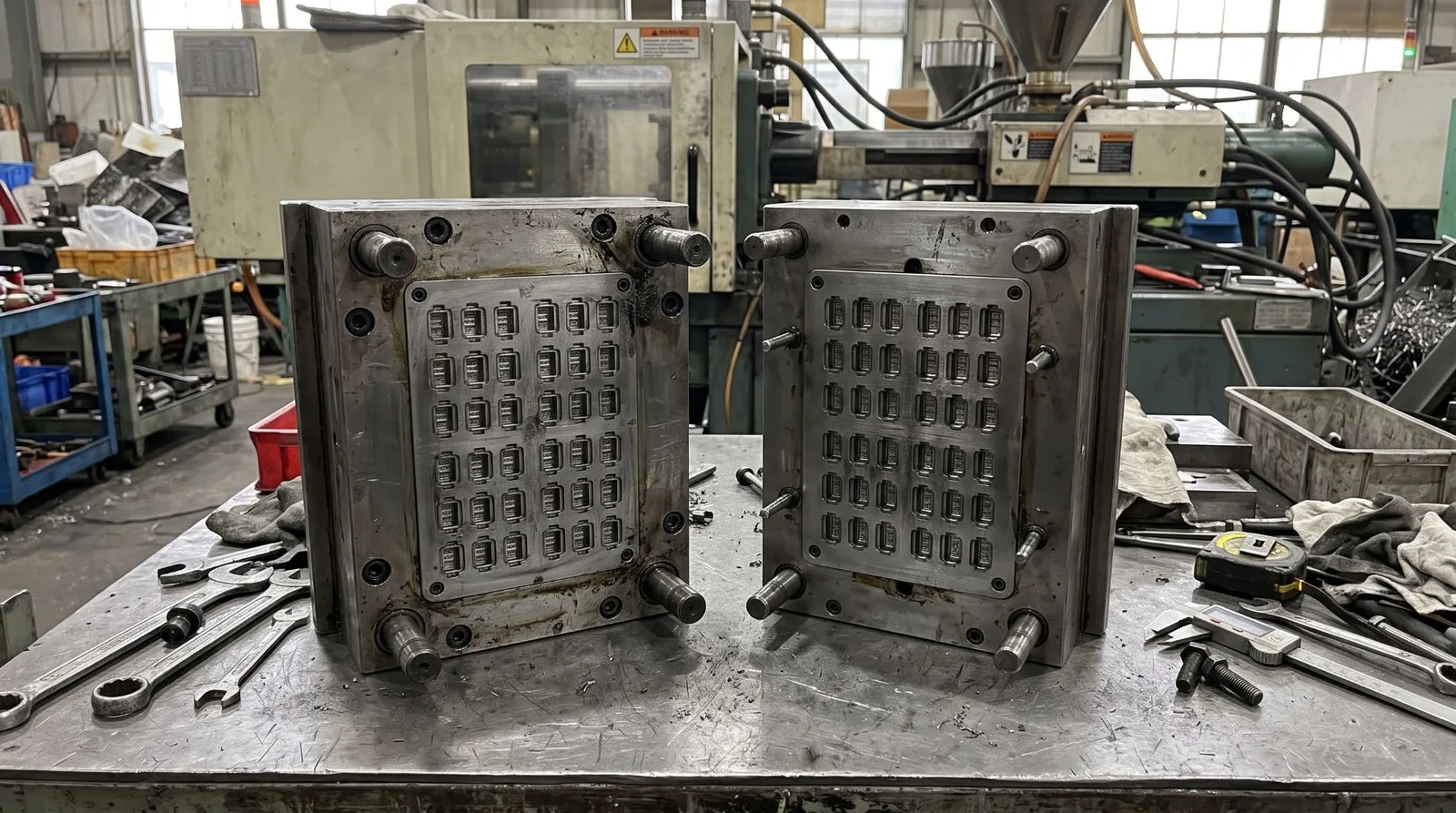
The two halves of a multi-cavity injection mold. Whoever controls this steel, and the design files behind it, controls your product.
Three ways brands lose their mold
1. The factory keeps it
You want to switch suppliers. The factory says the mold fee was a "contribution" and the mold stays. Or it agrees you own the steel, but says it owns the design inside it, and you can only use the mold in its workshop.
2. The mold shop has it
Many factories do not cut their own molds. A separate mold shop does, and it often keeps the drawings and design files. Even if the factory hands over the mold, someone else can still make a copy.
3. Your product shows up under another brand
The factory uses your mold during quiet weeks and sells the same product to other buyers. Sometimes on the same marketplace as you, at a lower price.
What real ownership looks like
You need more than an invoice. You need a short written agreement, signed before the mold is made. It should cover:
- Each mold, identified. A tool number, size, number of cavities and photos. "The mold" is not enough.
- Ownership, clearly stated. You own the mold and the design files, paid in full.
- The design files. You get a copy of the 3D files used to cut the mold.
- Exclusive use. The factory may only use the mold for your orders.
- Location and moving. The mold stays at a named address and cannot move without your written approval.
- Release on request. If you end the relationship, the factory returns the mold within a set number of days.
- Maintenance and lifespan. Who pays for repairs, and how many shots the mold is expected to last.
Mark the mold itself. A metal plate or engraving with your company name and tool number makes ownership visible on the factory floor.
This is not legal advice. For an expensive mold, have a lawyer who knows manufacturing contracts in China review the agreement.
The money math
Here is an example. These are illustrative numbers.
- A custom mold costs you $4,000.
- The factory raises its price by $0.50 per unit after your product takes off.
- You want to move, but the mold stays. A new mold elsewhere costs another $4,000, plus new samples and weeks of delay.
So you stay and pay. On 20,000 units a year, that is $10,000 a year for a mold you already paid for.
The agreement costs you an afternoon. Not having it can cost you your margin.
Private label is different
If you are buying a factory's existing product with your logo on it, the mold usually belongs to the factory, and that is normal. You did not pay for it, and other brands may sell the same base product.
The question only matters when you paid for tooling that makes your design. That is when you need ownership in writing.
How we handle molds for clients
When a client pays for a mold, we put the ownership terms in writing before the steel is cut, record the mold with photos and a tool number, and check that it is marked. If the client moves production later, the paperwork is already there.
Related reading: why two identical-looking products can be $0.20 apart.
Key facts
- An invoice for a "mold fee" proves payment, not ownership.
- Owning the steel is not the same as owning the design inside it.
- Mold shops often keep the design files, which allows copies.
- A written agreement should cover: tool ID, ownership, design files, exclusive use, location, release, maintenance.
- Mark the mold with your company name and tool number.
- Private label products usually use the factory's own molds; ownership matters when you pay for custom tooling.
Protect your mold before it is made
Paying for a custom mold soon? Send us the quote. We will tell you what to put in writing first.