Same Product, $0.20 Apart: What We Found When We Opened Both
Two quotes for the same product, $0.20 apart. The client asked why. We opened both units, and the answer was inside the motor.
A client asked us a fair question: "Why is your supplier $0.20 more per unit for the same product?"
From the outside, they were right. Same shape. Same silicone. Same colour. Same button. Put the two samples side by side and you could not tell them apart.
So we opened them.
The quote that looked too expensive
The client runs an e-commerce brand. The product is a small battery-powered silicone device: a soft silicone body, a control board, a rechargeable battery and a small DC motor.
We introduced them to a supplier with a very favourable quote. They already had a second quote from another supplier, $0.20 lower per unit. Their logic was simple: same product, lower price, easy choice.
That logic works when the products really are the same. Most of the time, you only know that after you look inside.
What we found inside
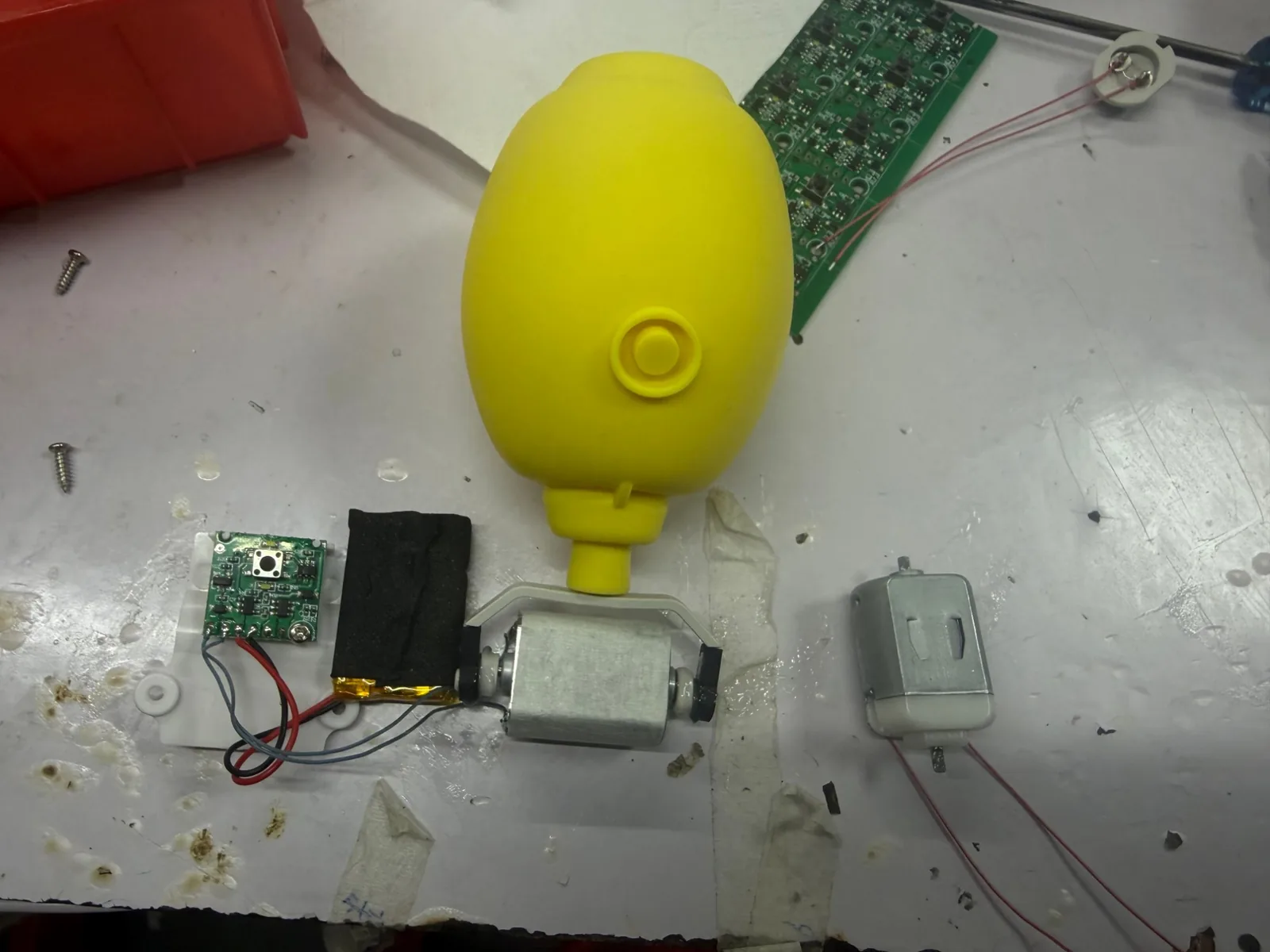
Left: the motor in the version from the supplier we recommended, still mounted under the device. Right: the motor in the version from the client's other supplier. Same size, same shape, different part.
The shell, the board and the battery looked comparable. The difference was the part that does the work: the motor. Same size, same housing, same mounting. A different part on the inside.
Copper windings, not copper-clad aluminium
The motor we recommended uses copper windings. Cheaper motors often use copper-clad aluminium wire. It looks like copper on the surface, but aluminium carries current less efficiently, so the motor runs hotter and wears faster.
A longer running life
Heat is what kills small motors. A motor that runs cooler lasts longer. Our supplier's motor is built for a longer running life, which matters for a product your customer uses again and again.
Quieter and smoother
Noise is the first thing a customer notices. The motor we recommended runs quieter and smoother at the same speed. Customers do not write reviews about motors. They write reviews about noise.
Steady output as the battery drains
Weak motors lose power as the battery runs down. Our supplier's motor holds its output more steadily, so the product feels the same at the end of a charge as it does at the start.
None of this shows on a product photo. All of it shows in your returns.
The $0.20 math
Here is an example. These are illustrative numbers, not the client's.
- You order 3,000 units. The cheaper motor saves you 3,000 × $0.20 = $600.
- You sell each unit for $30.
- A unit that fails costs you the refund, the shipping, the platform fee and a bad review.
Twenty failed units wipe out the whole saving. That is less than 1% of the order. Everything after that is a loss. And a bad review keeps costing you long after the refund is paid.
The cheapest quote is often not the cheapest product. It is the cheapest product until your customers start using it.
How to compare two quotes for the "same" product
Do this before you place the order, not after the reviews come in.
- Ask each supplier for a component list. Motor, battery, board, switch, material. If two quotes list different parts, they are not the same product.
- Order samples from both suppliers. Never compare a quote against a photo.
- Open the samples. Compare the parts that move, heat up or hold a charge: motor, battery, charging board.
- Run both samples side by side for the same time. Compare noise, heat and power at the end of a full charge.
- Write the approved components into your order. Motor type, wire material, battery capacity. A part that is not in the contract can be swapped later.
- Inspect mass production against the approved sample. The sample that wins your trust must be the product that reaches your customer.
Why we care about $0.20
Working with Kuai Sourcing is not "tell us what you need and we resell it to you." We look at the full set of materials, because your product is only as good as its weakest part.
$0.20 is not much when you are building a supply chain for the long term. A supplier who cuts corners on a part you cannot see will cut corners again. The client in this story saw the comparison and chose the supplier we introduced.
We do this because we grow when our clients grow. It does not matter where you are starting from: first order or fiftieth. We believe every seller can grow, and the right supplier is where that starts.
Key facts
- Case: an e-commerce brand compared two quotes for the same small battery-powered silicone device. The difference was $0.20 per unit.
- What differed: the motor. Same size and housing, different internals.
- The recommended motor: copper windings, longer running life, quieter and smoother, steadier output as the battery drains.
- Outcome: the client chose the supplier Kuai Sourcing introduced.
- Rule of thumb: compare component lists and opened samples, not prices and photos. Lock approved components into the order.
- About Kuai Sourcing: 1,400+ audited suppliers, 250+ quality inspectors, 6+ years in China.
Compare your quotes before you order
Have two quotes that look the same? Send them to us. We will tell you what is different inside.